CASE STUDY
Horizon Reality
A spatial identity system grounded in perceptual orientation.
The Challenge
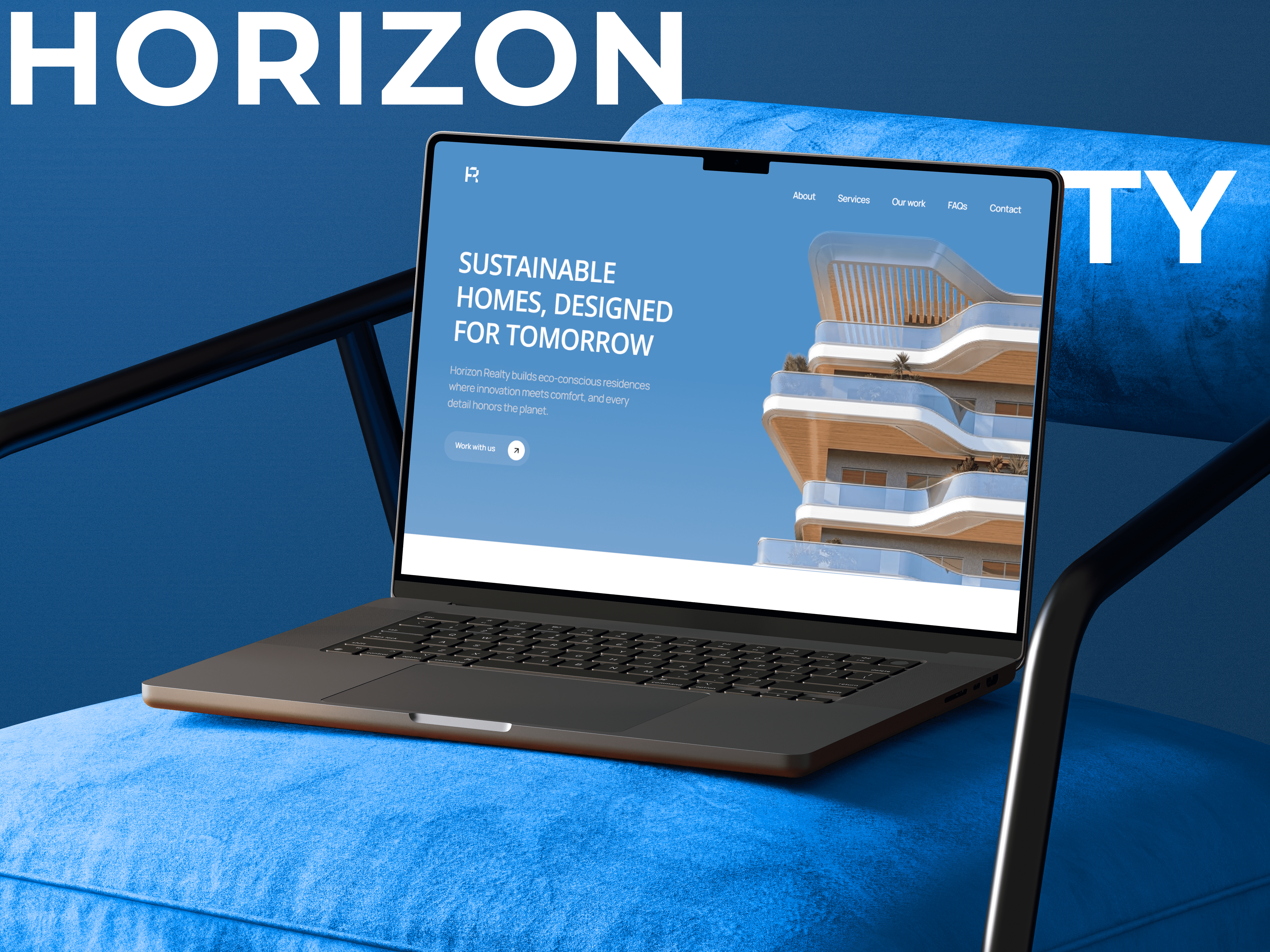
Horizon Reality entered a competitive digital and immersive space where innovation is often communicated through visual spectacle rather than structural clarity. Many brands default to gradients, abstract 3D forms, and exaggerated futurism to signal advancement. The challenge was to create an identity that communicated expansion and dimensional thinking without relying on aesthetic trends. The objective was to define a system that could scale across digital interfaces and brand applications while maintaining perceptual clarity.
Strategic Insight
A horizon is a point of orientation. It defines the boundary between dimensions and provides spatial reference. In immersive and digital environments, orientation determines usability and perception. Without a clear reference point, expansion becomes disorientation.
The core insight was to treat the horizon not as a graphic element, but as a structural principle. The identity would be derived from spatial logic not decorative futurism.
System Logic
The typography system was selected for clarity, stability, and technological precision. A modern geometric sans-serif establishes confidence while maintaining legibility across digital contexts. Weight distribution and spacing are controlled to ensure balance within expansive layouts.
The horizon line functions as the primary structural device. It establishes hierarchy, alignment, and spatial division across applications. Rather than acting as ornamentation, it governs layout behavior and compositional balance. Layering and depth are introduced through controlled shifts in scale and positioning. These shifts reinforce dimensional awareness while preserving clarity.
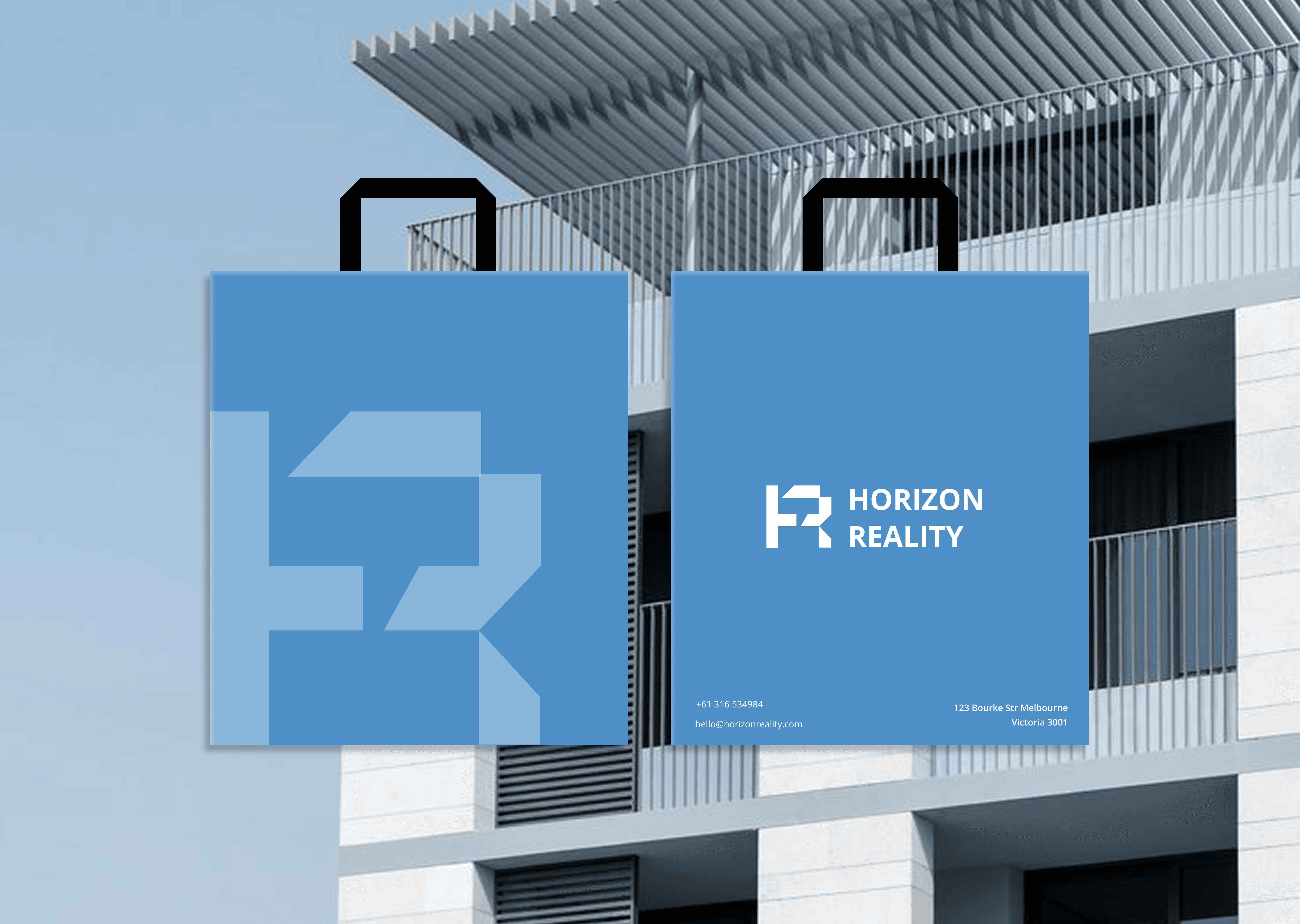
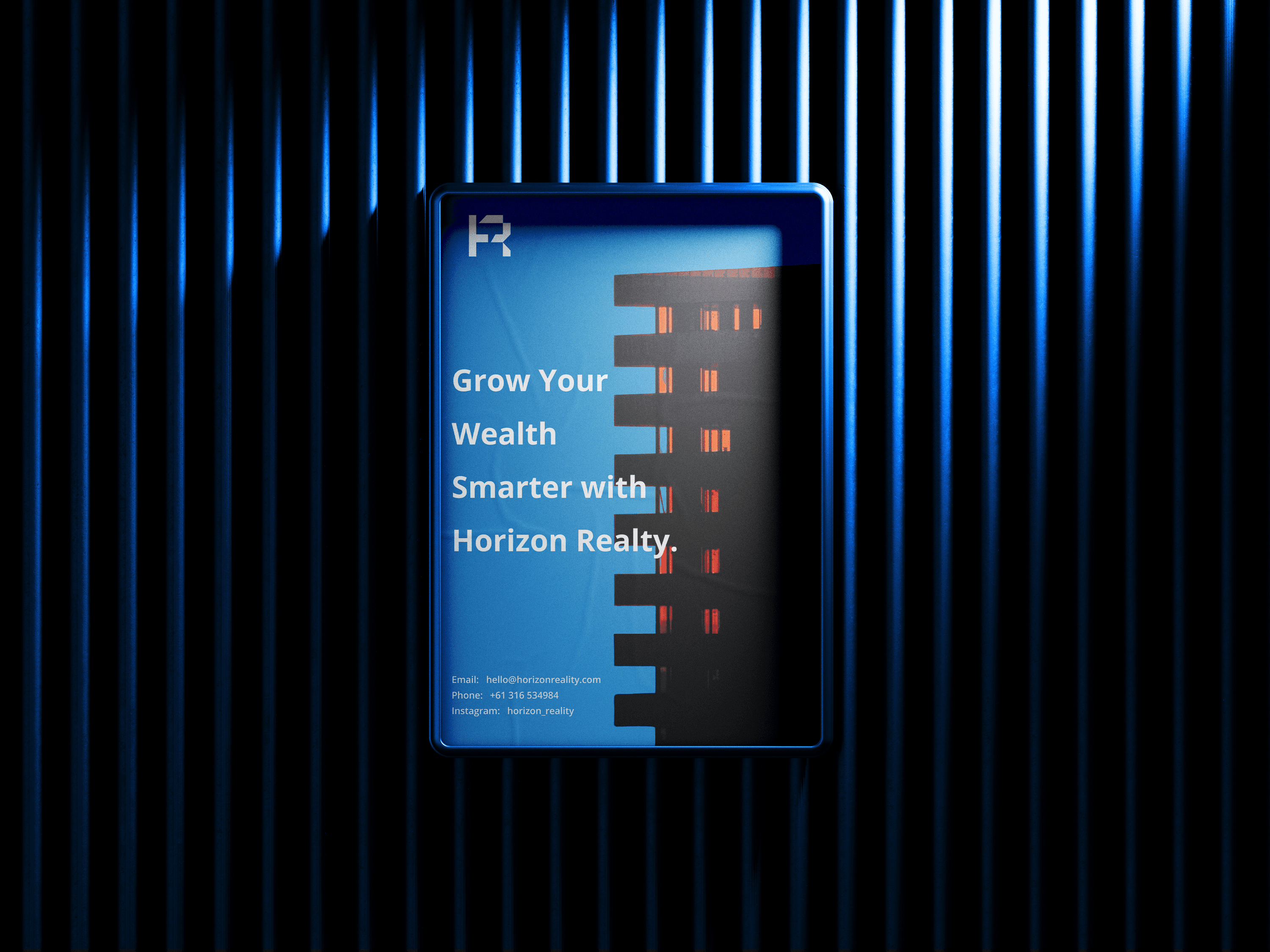
The system scales across web interfaces, motion graphics, environmental design, and digital presentations. The horizon axis may extend, fragment, or reposition depending on context, but proportional integrity remains constant. Every variation adheres to defined spacing and alignment rules. This ensures flexibility without compromising structural coherence.
Applications


Reflection
Horizon Reality demonstrates that innovation is strongest when grounded in disciplined architecture.
By prioritizing spatial logic over visual spectacle, the brand achieves clarity, scalability, and long term adaptability. Strategy defines perspective. Perspective defines design.