CASE STUDY
ARC Tennis
Precision in Motion
The Challenge
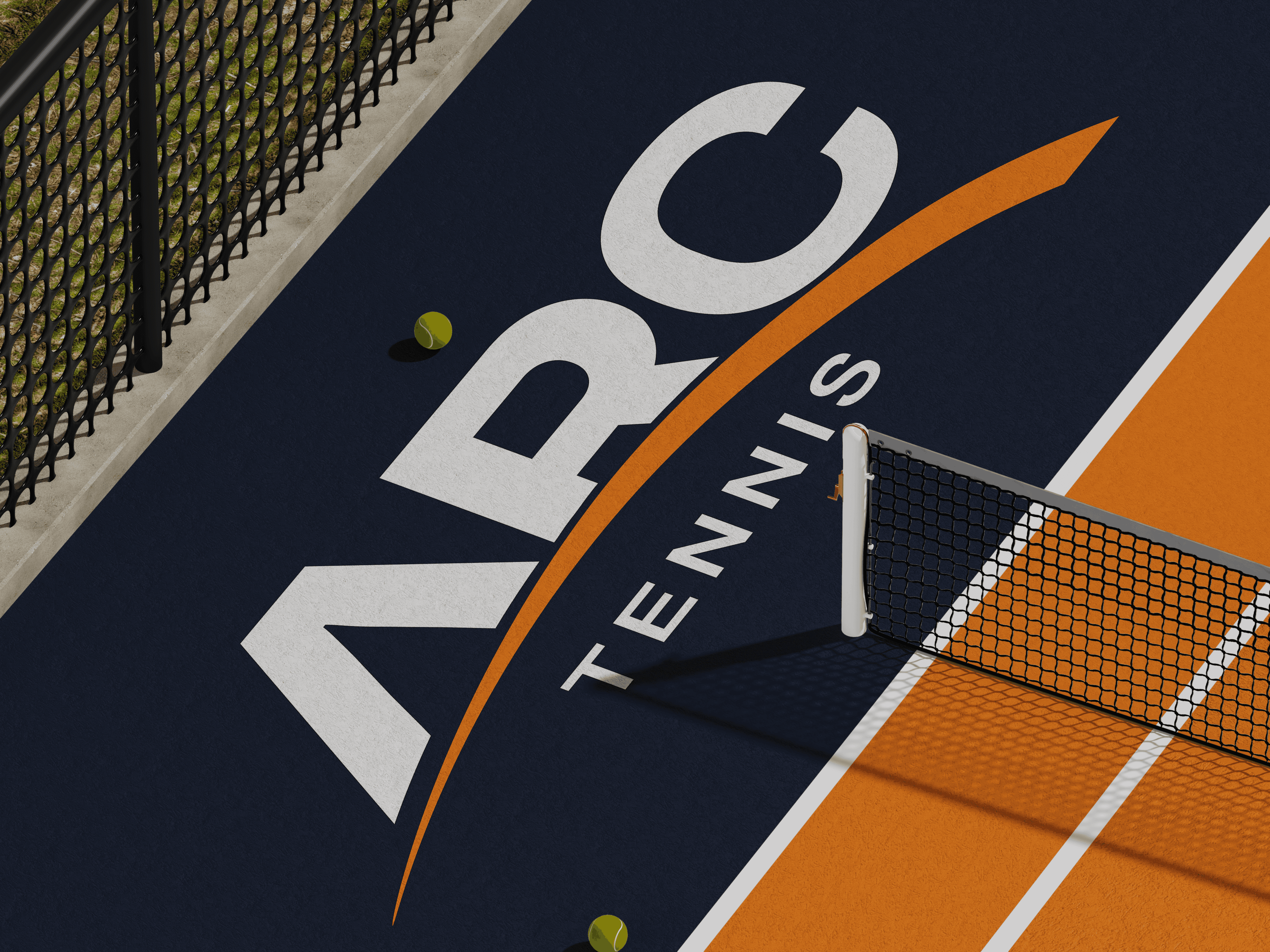
ARC Tennis entered a saturated sports identity landscape where most brands rely on literal symbolism rackets, balls, speed lines, and aggressive motion cues. The risk was becoming visually energetic but strategically indistinct. The challenge was not simply to design a tennis logo, but to define a system rooted in performance logic rather than surface aesthetics. The question guiding the project was clear: what structural principle could anchor the identity beyond decoration?
Strategic Insight
Tennis is often associated with speed, but its defining characteristic is trajectory. Every serve, rally, and return follows a controlled arc governed by physics, angle, and precision. Performance in tennis is defined by tension, repetition, and calculated motion. The insight was that the arc is not decorative it is structural. Instead of symbolizing tennis through obvious imagery, the identity was built from the governing behavior of the sport itself. The brand would be derived from trajectory logic, not visual clichés.
System Logic
Typography
The typography system was designed to reflect control and structural clarity. A geometric sans-serif foundation was selected to communicate precision and repeatability. Weight variation was kept restrained to preserve consistency, while spacing decisions were intentional and measured. The type system was designed to support the arc, not compete with it. Every typographic decision reinforced stability and discipline.
Trajectory logic
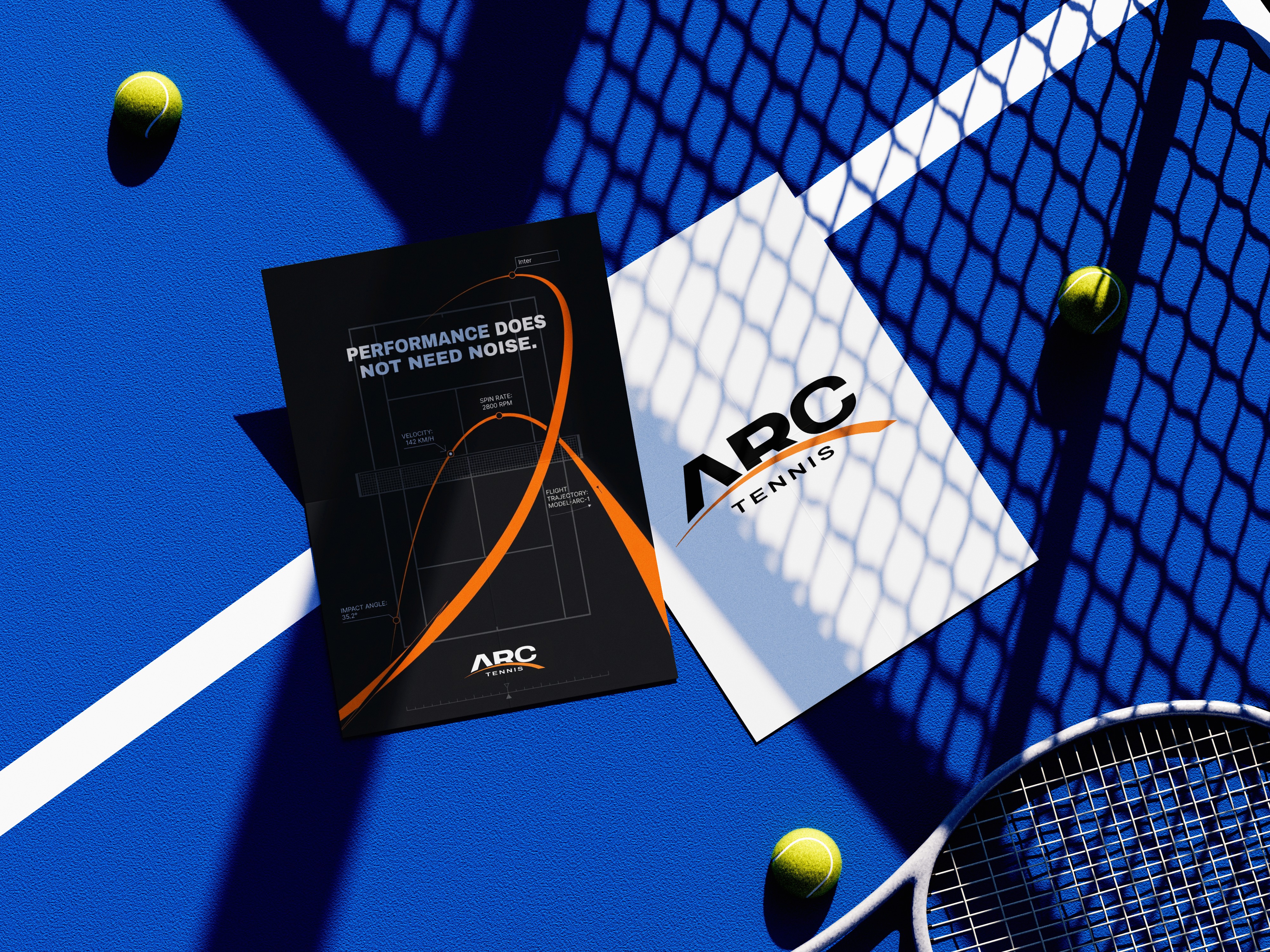
The trajectory logic became the core structural element of the brand. The arc was not a stylistic swoosh or decorative curve, but a calculated form referencing ball movement under tension and controlled acceleration. Its curvature follows a consistent ratio, allowing it to function modularly across layouts. Rather than acting as a logo accent, the arc serves as a spatial device guiding hierarchy, framing content, and directing visual flow.
Application framework
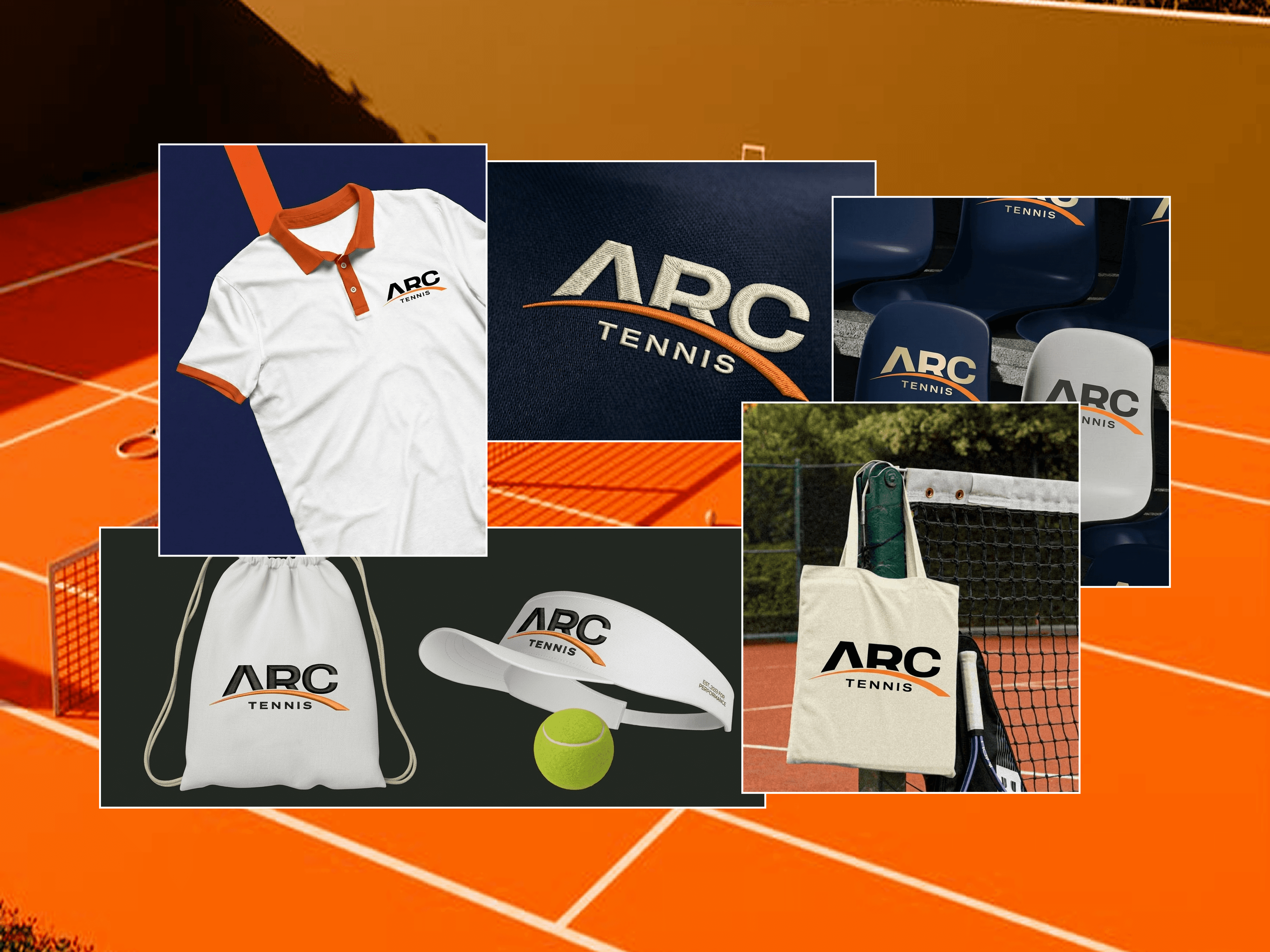
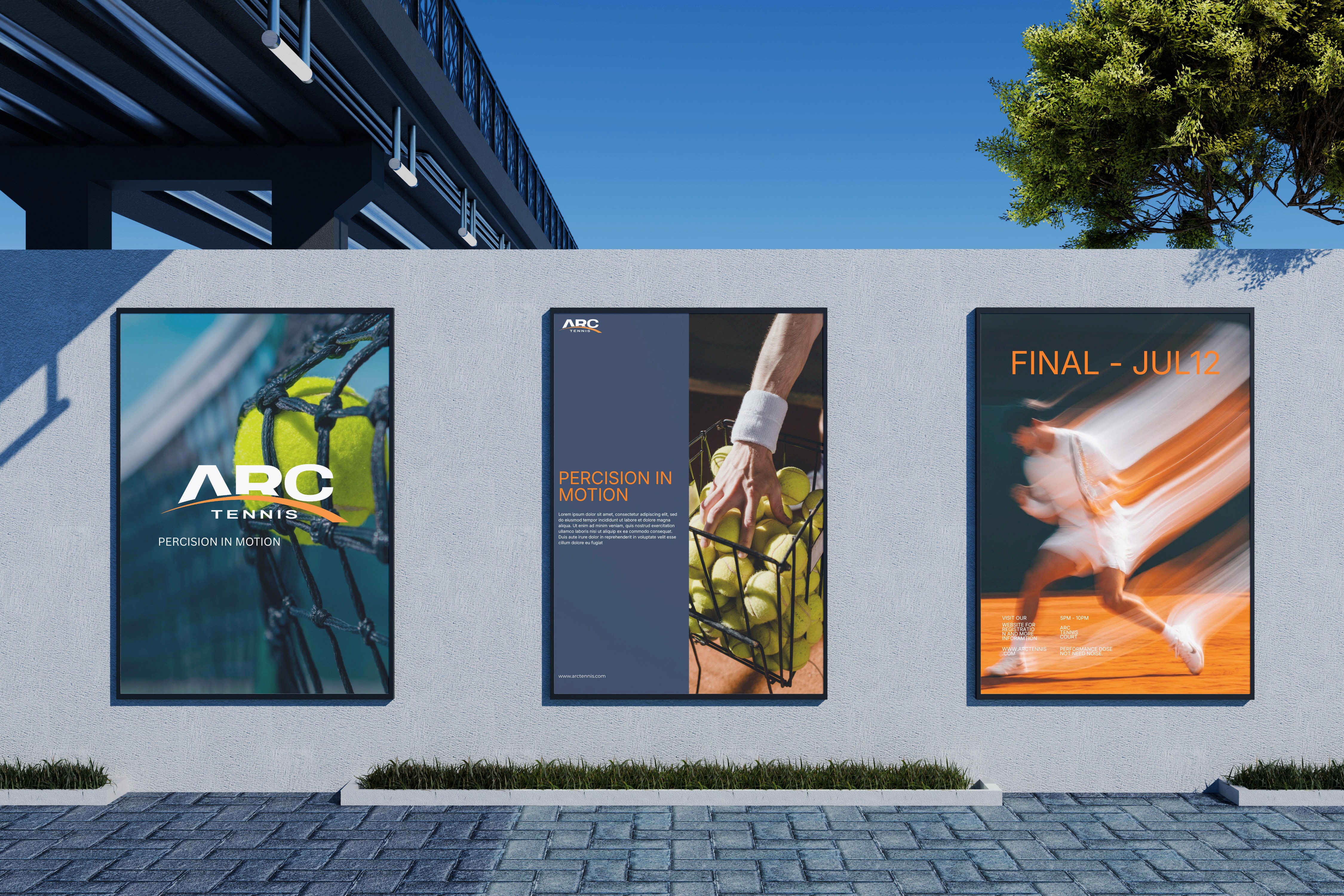
The application framework ensures scalability across digital and physical touchpoints. Whether in social graphics, apparel, motion systems, or web layout, the arc operates under defined rules. It never appears without structural purpose. It must either guide direction, contain information, or create spatial rhythm. Consistency in curvature and placement builds recognition, while disciplined usage preserves brand equity over time.
Applications

Reflection
ARC Tennis reinforced a core belief: strong brands are built from systems, not stylistic decisions. When identity is derived from structural insight, it scales naturally and maintains coherence across contexts. The project was not about designing for sport; it was about translating performance logic into visual architecture. Strategy defines structure, and structure defines design.